The Fort Myers film has three sources, and none of them is what you would guess from the driveway
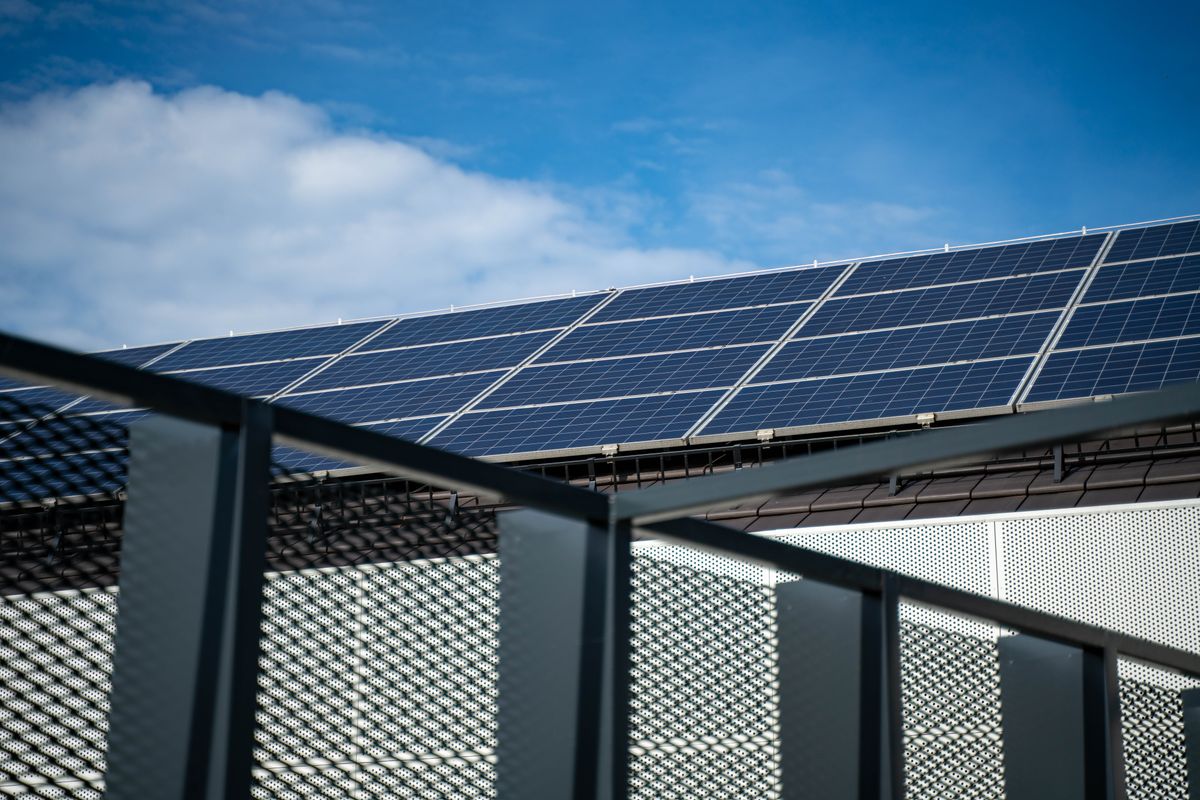
A rooftop array in Lee County does not look dirty from the ground the way a stucco wall or a paver drive does. The buildup is thin and even, so it reads as nothing until it has quietly cost you a share of every sunny afternoon. The film on a Fort Myers array is rarely one thing. Spring brings the oak and pine pollen that drifts out of the live-oak canopies along McGregor Boulevard and the older in-town blocks, settling as a yellow coat that blocks the whole spectrum. Summer is the Saharan dust: the same African dust that shows up in our hazy Gulf sunsets rides the trade winds across the Atlantic and the Gulf and settles as a fine reddish-grey grit that scatters light before it reaches the cell. And the whole year round, the salt that comes off the Caloosahatchee and the Gulf lands as a faint haze that dulls the glass. On a shaded lot under big trees it is worse still, because the film holds the humidity against the pane and the organic haze finds a way to stick. None of it rinses off in the way people expect from a Florida rain.
Why the afternoon storm is not cleaning your panels
Southwest Florida's wet season gives homeowners a false sense that the array is being washed for free. Rain does knock the heaviest loose pollen and dust off a pitched panel, which is real. But a hard Lee County downpour also throws grit and irrigation overspray onto the glass, and our rain tends to dry as mineral spotting rather than a clean sheet - the water evaporates fast under the same sun that is supposed to be powering the house, leaving a calcium haze behind on the very panel it just rinsed. That is the quiet part of the local problem: between the airborne deposits that land and the minerals our rain and sprinklers leave, a panel that "gets rained on" can still be losing output month after month. It is why a periodic cleaning rather than a hope-the-weather-does-it approach is what actually protects the investment.
The number that proves it: what soiling costs a Lee County array
Dirt on solar is not cosmetic, and the loss is not a rounding error. Industry measurements across Florida put soiling losses anywhere from five to twenty-five percent of output depending on how long the buildup has gone, and the longer between cleanings the higher the figure climbs. On a system sized to carry part of a Fort Myers power bill - which in the summer is running an air conditioner almost continuously - a fifth of the array's output is real money on the FPL statement every month, not a one-time event. The frustrating part is that the loss is gradual and silent, so it is easy to blame on clouds or on a hot afternoon. Because the degradation is spread across every day rather than arriving as one visible failure, which makes a scheduled wash one of those rare maintenance jobs where the least expensive answer is the very one owners keep skipping.
Read it in the monitoring app before you climb anything
You do not need to walk the roof to know whether a Fort Myers array is underperforming. Nearly every modern installation is monitored through the inverter's app or the utility's production portal, and that data is the honest way to spot soiling. A clean array produces a predictable curve; when week-over-week generation drifts below the same sunny week from a season ago, or the morning and evening edges of the curve flatten while midday still looks fine, deposits are a strong suspect. Salt haze and dust show up first at low sun angles, when light passes through more film on its way to the cell - which is why a coastal system can look fine at noon and fall short at the edges of the day. We are glad to look at a production readout with you before we quote, because it tells us whether the answer is a cleaning or something that needs an installer, and it lets you measure the result after we leave by watching the curve climb back toward its clean baseline.
How we clean a panel we are not allowed to scratch
The rule that governs every panel we touch is that the glass and the seal around it are the fragile parts, and the warranty on a modern module is written to punish the wrong method. High pressure is off the table: a wand that is perfectly at home on a concrete driveway will force water under the edge of the panel, past the frame seal and toward the junction box and the wiring, and it can scour the anti-reflective coating off the glass. Abrasive pads are off the table for the same reason the manufacturers forbid them - they micro-scratch the surface and dim it permanently, and a scratched panel is a panel that will never make full output again. We clean with deionized water and soft brushes at low pressure, letting the water lift the film rather than forcing it, and we work the edges and corners by hand so nothing dries back on. Where a hard Lee County water supply would leave a calcium haze, the deionized water we finish with evaporates clean, which is exactly the method the panel manufacturers and the inverter warranties require.
Bird droppings and a single shaded cell drag down the whole string
Two local deposits deserve their own mention because they are concentrated rather than even. Bird droppings - from the shore birds that loaf on waterfront ridges, the pigeons on commercial roofs, and the gulls working the Caloosahatchee - hit a single cell or a small patch of cells with a dense, opaque deposit that blocks that region entirely. Because the cells in a string are wired in series, one fully blocked cell drags down the current of the whole string, so a few isolated droppings can cost you more real output than a uniform haze across the entire array. The same is true of a shaded corner from a low-hanging oak branch. Ocean and river spray are the opposite: they are even, they are everywhere, and they are corrosive, working over time at the aluminum frame, the racking, and the edge of the glass. Neither is something a homeowner's hose and a long-handled brush can safely fix at the heights most arrays sit.
Ground, low-tilt, and rooftop arrays each need a different approach
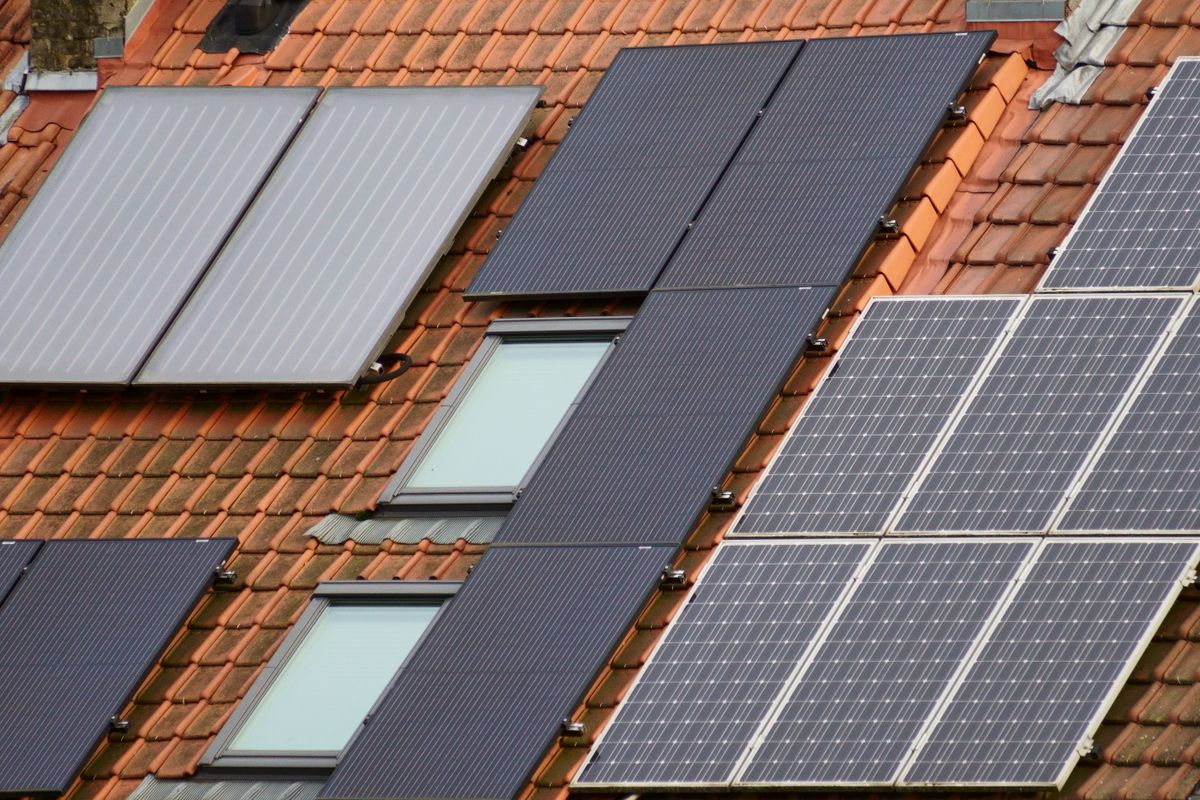
The way we reach and clean an array depends on how it is mounted, and Fort Myers has all three. Most in-town and Gateway residential systems sit on pitched rooftops, where gravity helps the water run and a reach pole from the eave can do much of the work. The low-tilt and flat-mounted arrays - increasingly common on commercial roofs, carports, and the ground-mounted systems you see on the larger lots out toward Lehigh Acres and Gateway - are the harder case, because a nearly flat panel has almost no self-cleaning: rain sits on it rather than running off, so the salt and dust dry back onto the glass and a pollen load bakes on in the summer heat. Ground racks bring their own access and, near the river, their own salt load. We match the method to the mount, never walking the panels, never leaning weight on the glass, and never letting a high-pressure wand anywhere near the system.
What a cleaning will not fix, said before the invoice
Not every drop in output is dirt, and on the coast the non-dirt causes are common enough that we name them up front. Snail trails - the thin brown branching lines that creep across a cell - are not a stain; they are micro-cracks in the silicon letting moisture in, and no cleaning touches them. Hail and flying debris can crack a cell invisibly under the glass, and that is a warranty claim to an installer, not a job for a wash crew. Aging panels will underproduce no matter how clean they are, and electrical faults belong to the electrician who installed the system. What a cleaning genuinely restores is the output a healthy, working array loses to a coating on the glass. If your production is down and the panels are visibly filmed, cleaning is the cheapest, safest first move. If the panels are clean and still short, the answer is elsewhere, and we will tell you that rather than take the money for a wash that cannot help.
When to schedule it, and how it fits the rest of the roof
The stretch from late autumn through early spring is the natural window to book, and the one that matters most: that is when the array earns its keep in clear high sun, and when a filmed panel costs the most. A clean going into the dry season buys you the full high-production stretch, and the summer months are a morning job watched against the afternoon storms. Two cleanings a year is the honest coastal rhythm for a Fort Myers system; a low-tilt or riverfront array wants the salt rinse more often, and a shaded lot under oaks may need the spring pollen pass and a fall pass. Because the panels sit in the fall line of the very roof below them, the efficient play is usually to pair the cleaning with the roof - the truck is already on the lot, and clean glass set against a clean roof in Fort Myers is what a coastal home is supposed to look like. If the whole exterior is due, folding the panels into a house wash visit saves everyone a second trip. If you would like the actual figures behind a Lee County visit before you call, the Fort Myers pressure washing cost guide itemizes the price by surface.